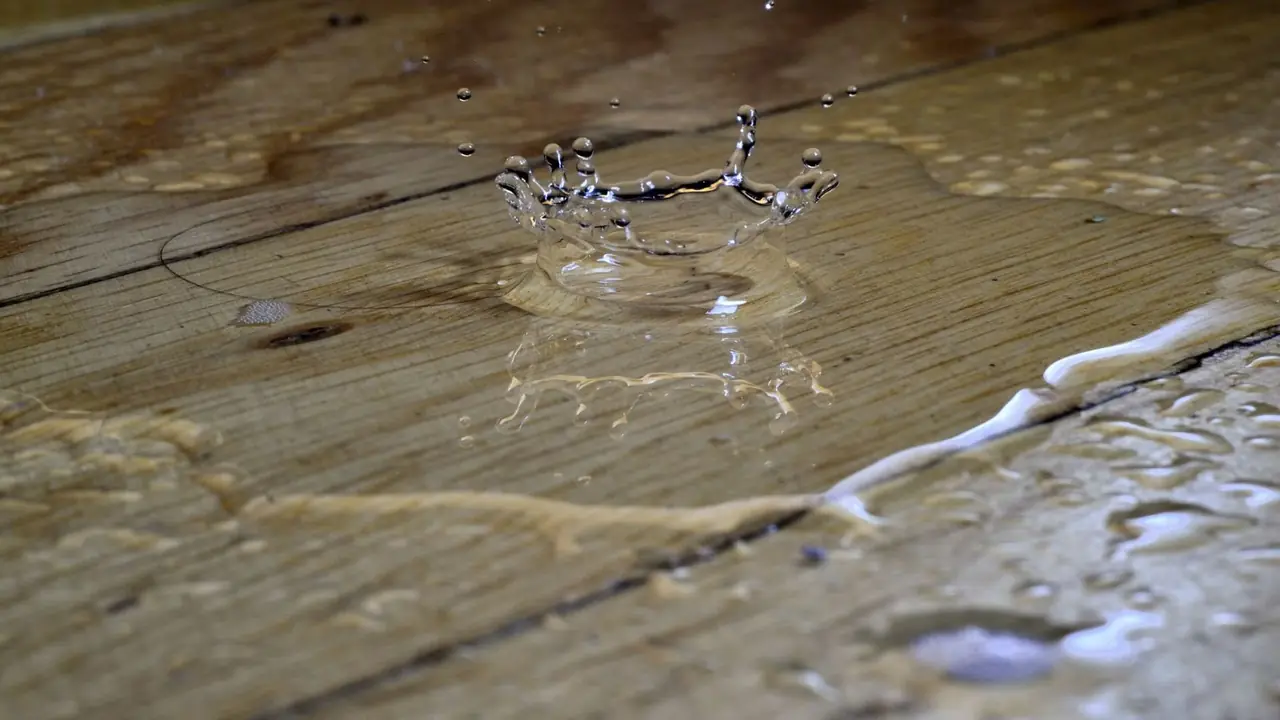
Why hardwood warps after a leak
Wood swells across its width when it takes on moisture and shrinks as it dries. When one side of a board holds more water than the other, the board bends. The shape of the bend tells you where the moisture came from and how serious the damage is.
Most hardwood floors in Marina Del Rey sit over concrete or a wood subfloor in a multi-unit building, so water often arrives from a pipe, an appliance or a neighbor above. Knowing the shape of the distortion helps you decide whether to wait, dry or replace.
Cupping, crowning and buckling compared
| Condition | What it looks like | Common cause | Usual path |
|---|---|---|---|
| Cupping | Board edges rise higher than the center | Moisture from below or a slow leak | Dry slowly, then sand flat if readings are normal |
| Crowning | Center of the board rises above the edges | Sanded while still damp, or cupping that was sanded too early | Allow full drying, then sand again |
| Buckling | Boards lift off the subfloor | Heavy or long exposure to water | Remove affected boards and dry the subfloor |
Cupping is the mildest and the most common. Buckling is the one to treat as urgent, because lifted boards mean water has been present long enough to break the bond with the subfloor.
How long drying actually takes
There is no single schedule. Thin engineered planks may stabilize in days, while thick solid boards can take weeks to release water they absorbed. The pace depends on the humidity in the unit, how much airflow crosses the surface, and whether the subfloor underneath is wet.
Crews use air movers to move air over the surface and dehumidifiers to pull moisture out of the room. Some jobs use floor drying mats that draw moisture upward from the boards. Technicians recheck readings every day or two and stop only when the wood matches a dry baseline.
Solid versus engineered flooring
| Type | How it reacts to water | Repair outlook |
|---|---|---|
| Solid hardwood | Absorbs water slowly, swells and cups, can recover if dried gently | Often sanded and refinished if thickness allows |
| Engineered hardwood | Layers can separate and the top veneer may delaminate | Frequently replaced once the layers lift, since the veneer is thin |
| Floating floor over underlayment | Water seeps beneath planks and stays trapped | Planks come up so the underlayment and subfloor can dry |
If you are unsure which type you have, look at a board edge near a floor vent or transition strip. A single solid piece of wood suggests solid hardwood, while visible layers suggest engineered flooring.
When replacement is the better call
- Boards are loose, hollow underfoot or lifting from the subfloor.
- The water came from a toilet, sewer line or storm runoff.
- Finish is peeling in sheets or boards have turned dark gray or black.
- Moisture readings stay high after several days of controlled drying.
- The veneer on engineered planks is splitting or separating.
Our water mitigation team handles the drying stage and tells you honestly when boards will not recover. The rebuild that follows, from new planks to a refinished surface, is done under water damage repair.
Marina Del Rey notes: renters, owners and reporting a leak
Reference data on Santa Monica show that about 73 percent of occupied homes there are renter-occupied. If you rent in Santa Monica or anywhere nearby, report a leak to your landlord in writing the same day, attach photos and keep a copy. A written, dated report protects you when someone later asks when the damage started.
Owners should check the association rules too, because many condo documents split responsibility between the unit and common pipes. Similar mixed ownership applies in Culver City buildings, so ask who is responsible for the pipe that failed before you order repairs.
What to do while you wait
Small steps that protect the boards
Keep the room cool and well ventilated, but avoid blasting heat at the floor. Remove rugs, plants and trays that trap moisture. Photograph the floor each day so you have a record of how it changes. Do not sand or fill gaps until readings are confirmed.
Reading the floor over the first week
| Timing | What you may see | What it usually means |
|---|---|---|
| First day | Darkened seams, slight swelling, damp feel | Water is still in the boards and a quick response can limit spread |
| Two to three days | Edges begin to rise, gaps may appear | Absorbed moisture is moving through the wood, so drying should be active |
| One week | Cupping holds, finish may crack, smell may develop | Moisture is trapped, and readings should be checked below the surface |
| After drying | Edges settle or stay raised | Settled boards can be refinished, raised ones need sanding or replacement |
Mistakes that make cupping worse
- Sanding before the readings match a dry section of the floor.
- Aiming a space heater at the boards to speed things up.
- Covering the damp floor with rugs, plastic sheeting or tape.
- Filling gaps with caulk or wood filler while the boards are still swollen.
- Waiting for the floor to dry on its own while a hidden leak continues.
Fast action usually costs less than late action. What changes the price is the size of the area, the type of flooring, the water category, how many days of drying are needed and whether the subfloor is affected. A crew should explain scope and price before work begins, and nobody can fairly name a figure without seeing the floor.
Before you choose a refinisher, ask for the final moisture readings and how they compare with a dry section of the same floor. A refinisher who skips that question is guessing, and a guess can cost you a second sanding.
If only one room is affected, ask how a repair will blend into the rooms next to it. Stain and sheen rarely match exactly, so continuous floors sometimes need to be refinished across a threshold or along a natural break.
Boards lifting or cupping after a leak? Call the 24/7 line to arrange moisture readings.
Call (424) 550-5662Frequently Asked Questions
Cupping happens when the underside of a board holds more moisture than the top. Leaks, high humidity, wet concrete or a wet subfloor can all cause it.
Mild cupping often relaxes as boards dry evenly over several weeks. If edges stay raised after the readings stabilize, sanding levels them. Severe or buckled boards are usually replaced.
Buckling means boards have separated from the subfloor, and the cause is usually a significant water event. A professional should check the subfloor, because hidden moisture will damage new boards.
It depends on how long it stayed wet. The top veneer is thin, so layers that lift or separate cannot be sanded back. Short exposures sometimes recover, long ones rarely do.
ANSI/IICRC S500 is the published standard for water damage restoration, and it ties drying to moisture readings. For hardwood, that means the floor is judged by readings over time, not by how flat it looks. Ask any company whether it follows S500 and logs those readings.
It depends on the lease, the cause and local rules, so read your lease and ask your landlord. Report the leak in writing right away and keep photos, because delays can make a dispute harder to settle.