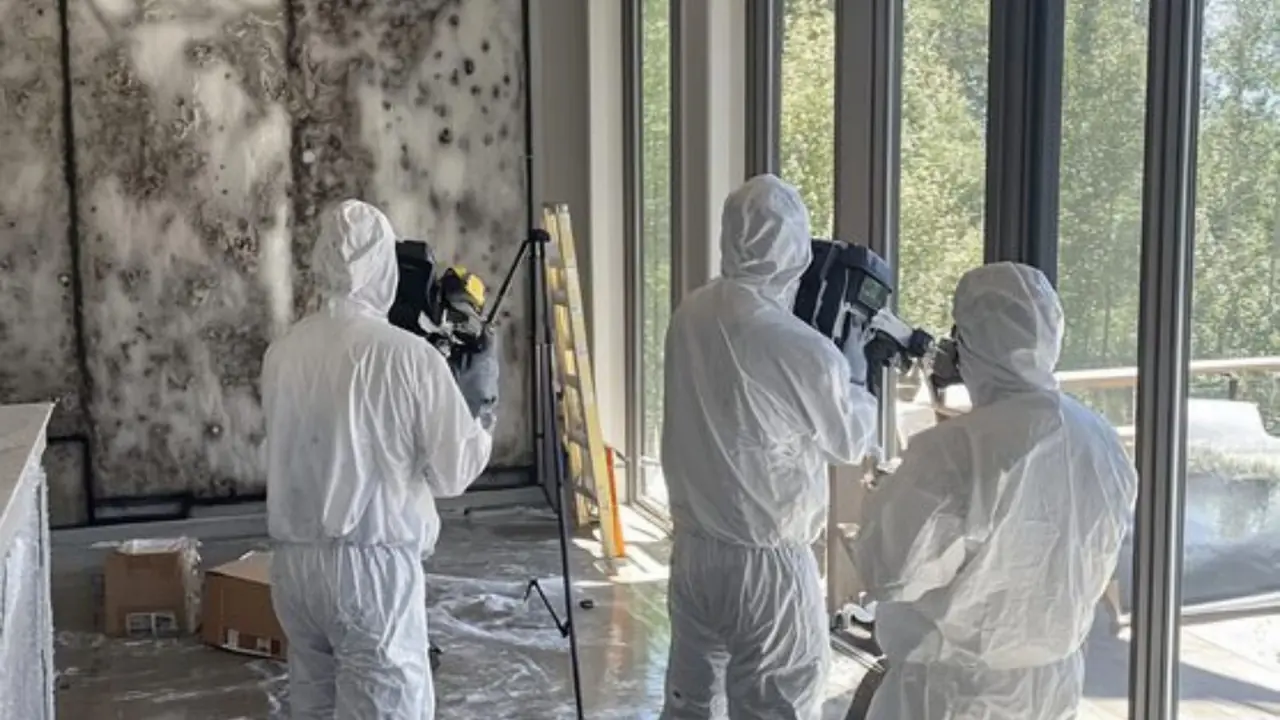
What a mold removal job should include
A mold removal service is not just cleaning. A proper job finds the moisture source, defines the affected area, contains it, removes or cleans the materials, dries the structure and checks the result. If a quote skips the moisture question, the mold will likely have a reason to return.
In Marina Del Rey, calls often start after a leak under a sink, a condensation problem in a closet or a ceiling stain from the unit above. Those are all moisture stories first and mold stories second, which is why the first visit is an assessment and not a spray-down.
The stages of a typical project
Assessment
A technician inspects the area, takes moisture readings and finds the water source. Anything that is still leaking has to be fixed first.
Written scope
The company lists what will be removed, what will be cleaned and how the area will be contained, and explains how the price is set.
Containment
Plastic sheeting and negative air machines keep dust and debris inside the work area.
Removal and cleaning
Porous materials with growth are removed. Hard surfaces are cleaned with HEPA vacuums and damp wiping.
Drying and verification
Air movers and dehumidifiers dry the area. Final checks confirm the area is dry and visibly clean.
Standards and what to ask about them
The industry publishes a standard for this work, ANSI/IICRC S520, covering how mold remediation is planned and carried out. It is a good question to put to any company: do your crews work to S520, and can you show how that shapes the scope you gave me?
Also ask whether your state licenses mold work and whether the company or its crew holds whatever is required. Rules differ by state, so confirm with the state agency rather than relying on a verbal answer.
Comparing quotes fairly
| Question | Why it matters | A good answer sounds like |
|---|---|---|
| Where is the moisture coming from? | Mold returns if the source is not fixed | A specific cause and a plan to resolve it |
| What will you remove and what will you clean? | Scope drives cost and the final result | A written list tied to what the inspection found |
| How will you contain the area? | Prevents spreading to other rooms | Sealed barriers, negative air and HEPA filtration |
| How will we know it is finished? | Completion should be verifiable | Visual checks, dry readings and optional independent testing |
Prices vary with the size of the affected area, the materials involved, how much containment is needed and how long drying takes. Be careful with a quote that gives a number before anyone has seen the space, since the scope is not known yet.
Clearance testing for a sale or a loan
Some buyers and lenders ask for proof that mold was addressed. That usually means independent clearance testing done by a third party who did not perform the removal. Having a separate tester avoids any appearance of grading your own work.
Whether a lender or buyer accepts a particular report is their decision. Ask them what they need before you schedule, and keep the written scope, drying records and test results together. Our mold remediation page lists what documentation to expect, and the drying side is explained under water mitigation.
Marina Del Rey notes: permits and building departments
The City of Culver City publishes information for its Building Safety Division, located at City Hall on Culver Boulevard, covering building, mechanical, electrical and plumbing permits. If mold removal in a Culver City home also means opening walls and replacing drywall or wiring, ask the division whether the repair side needs a permit before the project starts.
The same question applies across the area, but the answer depends on who has jurisdiction over your address. A home in Santa Monica goes through the city, while a unit in unincorporated Marina Del Rey falls under Los Angeles County. Confirm the parcel first, then ask that building department what applies.
Red flags to watch for
- A price quoted over the phone with no inspection.
- No mention of the moisture source.
- Promises that mold will never return.
- Pressure to sign the same day with no written scope.
- Refusal to say whether crews follow S520 or what the state requires.
What affects price and schedule
Mold work is priced by scope, so two quotes for the same room can differ if one includes containment and drying and the other does not. Compare what each includes before you compare the totals.
- The size and number of areas affected.
- Whether materials like drywall, insulation or carpet must come out.
- The level of containment and air filtration needed.
- How much drying equipment runs and for how many days.
- The cost of rebuilding after removal, which is usually separate.
- Any independent testing that you or a buyer requests.
A small isolated area can be quick, while a project with hidden moisture behind walls takes longer. An honest company explains scope and price method before work starts and tells you if the schedule depends on drying.
What you can do before the crew arrives
- Fix or stop the water source if you can do so safely.
- Close the door to the affected room and keep fans from pushing air across it.
- Move belongings out of the area and cover large items with plastic.
- Take photos and note when you first saw the problem.
- Ask your landlord or association what approvals are needed.
Do not scrub or demolish the area yourself, since that spreads debris. Questions about health belong with a physician, and a restoration crew handles the building side.
Keep all paperwork from the job in one folder: the written scope, photos before and after, drying records and any test reports. If you sell or refinance later, that file answers most of the questions a buyer or lender is likely to ask.
Finally, plan for the rebuild. Removal leaves open walls or missing drywall, and the repair crew needs a dry, cleared space. Ask each company whether it handles the rebuild or hands it off, and how the schedule will fit together.
Want the scope and price method explained before work starts? Call the 24/7 line.
Call (424) 550-5662Frequently Asked Questions
They find the moisture source, contain the affected area, remove or clean materials, dry the space and verify the result. Cleaning alone, without addressing moisture, is rarely enough.
Yes. ANSI/IICRC S520 is the published industry standard. Ask any company whether its crews work to it and how it affects your scope.
It is optional unless a buyer, lender or landlord asks for it. When required, third-party clearance testing is usually done by someone who did not do the removal work.
Rules differ by state and can change, so ask the state agency or ask the company directly what license it holds. Do not rely on a verbal assurance alone.
It depends on what is rebuilt. Replacing drywall may not need one, but electrical or plumbing changes often do. Ask the Building Safety Division before you start.