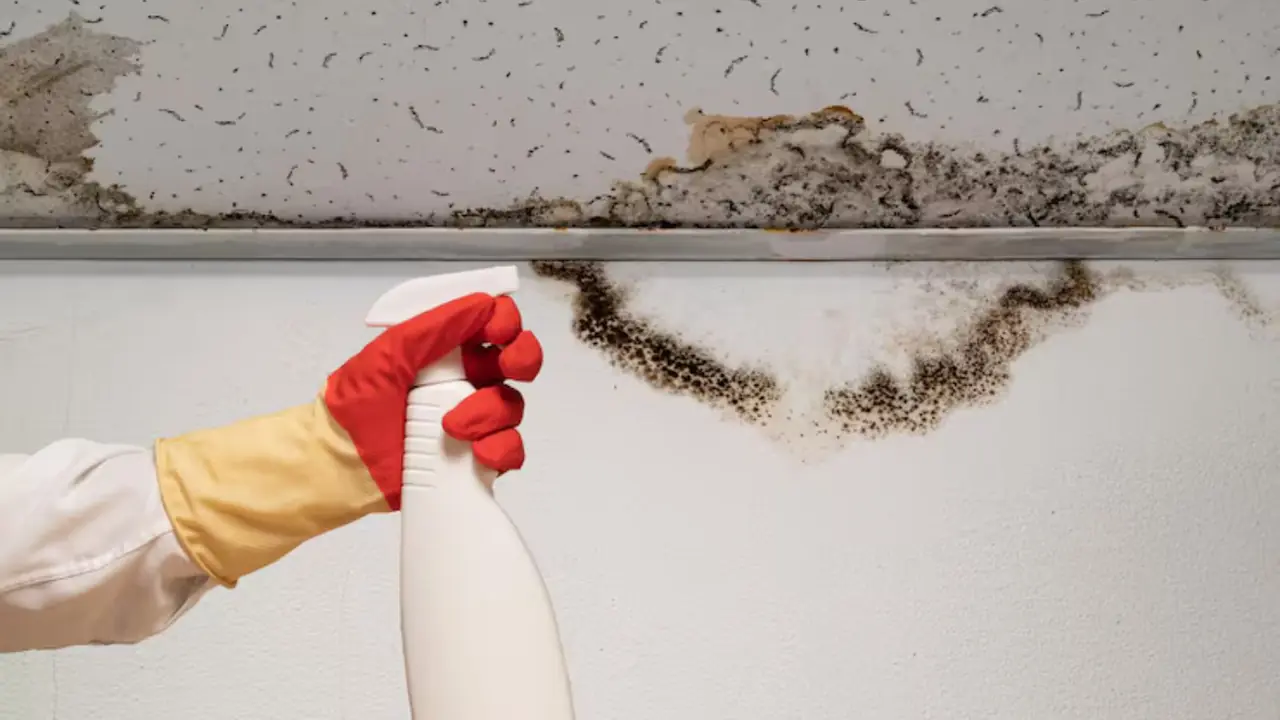
Start with the source, not the stain
Mold on a ceiling tells you moisture has been reaching that surface for days or weeks. Whether a particular spot matters for the health of the people in your home is a question for a physician, and this guide does not try to answer it. What you can decide today is how to find the water, how to avoid spreading debris around the unit, and who to call.
In Marina Del Rey, most ceiling mold traces back to one of three places. A roof, balcony or window leak lets rain in from outside. A supply line, drain or tub overflow in the unit above drips down through the framing. Or warm, humid air from a bathroom or an air conditioning condensate line meets a cool ceiling and leaves water behind.
Three common sources and how to tell them apart
| Source | What you will notice | Who usually fixes the cause |
|---|---|---|
| Roof, balcony or window leak | Stains grow after rain and dry out between storms | Building owner, association or landlord |
| Plumbing in the unit above | Stain stays damp in dry weather and may drip | The upstairs owner or the association, depending on the pipe |
| Condensation or a blocked condensate line | Spots cluster near vents, bathroom fans or closets | You, or the equipment technician |
A ring-shaped stain that darkens at its edge often means repeated wetting and drying. A stain that feels soft or looks bulged means water is sitting in the material right now. A quick touch with a gloved hand tells you which of the two you have before you decide how urgent it is.
What to do in the first hour
- Photograph the ceiling with a coin or ruler beside the stain so the size is clear.
- Place a bucket under any drip and move furniture, electronics and rugs out from under the area.
- Switch off a fixture or fan if water is running through it, and stay clear of wet light fittings.
- Shut the door to the room and keep fans from blowing across the ceiling, since moving air can scatter debris.
- Write down when you first noticed it and whether it changes after rain or after the neighbor above uses water.
- Send the photos to your landlord or association in writing the same day.
What not to do
Do not scrub or scrape dry growth off the ceiling, because that drops material onto the floor and into the air. Do not paint or caulk over it. Stain-blocking paint hides the symptom while moisture keeps working behind the surface, and the stain returns through the new coat.
Bleach is the usual first reach and a poor fit here. On drywall or ceiling tile the liquid soaks in while the growth often sits deeper than the surface. Skip any plan that combines household cleaners too, since mixing products can release harmful fumes in a closed room.
Surface spots versus a ceiling that needs opening
| What you see | What it usually means | Typical next step |
|---|---|---|
| A few small spots near a bathroom fan | Condensation and weak ventilation | Repair the fan or vent, dry the area and have it assessed |
| A stain that spreads after rain | An active leak from the building envelope | Find and stop the leak, then dry and assess the materials |
| Sagging, bulging or flaking drywall | Water trapped inside the material | Professional drying and removal of the damaged section |
| A musty smell with no visible spot | Moisture hidden in the ceiling cavity | Moisture mapping with a meter and a thermal camera |
Moisture meters and thermal imaging show how far the wet zone runs beyond the visible mark. That matters because the stain is often the smallest part of the area that needs attention.
How a professional assessment works
A crew first confirms the water source is stopped, then maps moisture across the ceiling and the adjoining walls. If material is wet, air movers and dehumidifiers go in. Damaged drywall is cut out inside a sealed work area so dust does not travel into the rest of the home.
Testing and removal follow the published ANSI/IICRC S520 standard for mold remediation, and you can ask any company whether its crews work to it. Our mold remediation page explains containment and clearance in plain terms, and the rebuild afterward falls under water damage repair.
Marina Del Rey notes: wet winters and roof leaks
News reports citing the National Weather Service described the 2024 atmospheric river storms as one of the wettest months on record for Los Angeles. A roof or balcony that held for years can start to seep after a season like that, so a ceiling stain that first showed up in 2024 deserves a roof inspection and not just a touch-up of paint.
If you own a unit in a building with an association, find out who maintains the roof, balconies and exterior walls before you hire anyone, because the cause may sit on common property. Roof leaks in neighboring communities such as Playa del Rey and Venice follow the same pattern, with stains growing after each rain.
When to call right away
Call the 24/7 line the same day if the ceiling is sagging, dripping or sitting under a light fixture, or if the stain is larger than a dinner plate. Those are signs water is still collecting above. Same-day response is available when crews are free, and scope and price are explained before any work starts.
Documenting the damage for your association or insurer
Keep a simple file. Save dated photos, a short written timeline, copies of every message to your landlord or association and any receipts for drying or cleanup. A clear record makes it easier to show when the leak started and who was told.
Coverage depends on your policy and on whether the cause was sudden or gradual, so ask your insurer rather than guessing. In a condo, also ask the association which parts of the ceiling and pipes it insures and which belong to the owner.
Water still coming through the ceiling? Call the 24/7 line and describe what you see.
Call (424) 550-5662Frequently Asked Questions
Whether mold affects a particular person is a medical question, so ask a physician about symptoms or sensitivities. From a building standpoint, ceiling mold means moisture is present and has to be found and stopped. Treat it as a cleanup and repair job with careful handling, not a cosmetic one.
Wiping a small dry spot is not the real problem. The problem is the moisture that fed it. If the source is still active, the spot comes back through fresh paint, and the drywall behind it may be wet or soft.
Mold needs moisture and time, and drywall left wet for more than a couple of days is a common starting point. Temperature, airflow and the material all change the timing. Drying quickly is the best way to lower the chance.
Report it in writing right away and ask for a date. If water is actively entering, a crew can start drying so the damage does not grow while the responsible party arranges the repair.
Look at ceilings and window corners after the first heavy rain of each winter and again after any big storm. Watch for new stains, bubbling paint or a musty smell near exterior walls. An early report to your association is easier to resolve than a spreading problem.